
Delegation to insist on flexibility in aiding low-cost access to HIV treatment.

With the setting up of the watchdog Competition Commission of India (CCI) and introduction of new legislation like the Direct Taxes Code and the Goods & Services Tax scheduled next year, private companies and consultancies are looking at the government pool of civil servants to meet their requirements.

Eight commonly prescribed anti-cancer drugs will soon enter India's National List of Essential Medicines (NLEM).

The ministry has asked 44 pharmaceutical companies, including global drug majors such as Eli Lilly, Novartis, Pfizer, Bayer, Merck, Johnson & Johnson and Sanofi Aventis, to explain why they have not given the compensation, which is mandatory under the current drug laws.

The central government is likely to notify the merger and acquisition (M&A) rules meant to operationalise M&A provisions prescribed under the Competition Act, 2002 by mid-April.

European countries are trying to woo back the Indian customers they had lost following seizure of drug consignments by Customs authorities of several European Union members.

FDI is essentially long-term investments that come with added benefits such as better technology, management and marketing assistance, says the study.

The move comes after international studies revealed that Gatifloxacin posed 17 times higher risk of developing serious hyperglycemia than other antibiotics in elderly patients.

A lot of global products are yet to be launched in the country. In the last eight months, we have launched six products from our global product portfolio.

India may have to abide by a series of international standards and regulatory practices in the healthcare sector, if it agrees to some proposals that are part of the ongoing India-EU Free Trade Agreement (FTA) negotiations.

If implemented, the measure would have choked the availability of funds for real estate firms and infrastructure companies, which typically have several layered subsidiaries.

The letters were meant to assess if there had been any professional misconduct by any auditors of Reliance Infra and Reliance National Resources Ltd that led to the alleged misrepresentation of investments by these companies.

The ministry of corporate affairs - under new minister Murli Deora - has reopened for further investigation the cases of two companies allegedly involved in the unravelling 2G scam. A senior official said that the ministry was currently probing Swan Telecom and Loop Telecom.
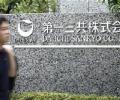
Daiichi Sankyo, Japan's third-largest drug maker, has transferred six of its early drug discovery programmes in inflammatory and infectious diseases from its Japanese research & development (R&D) facilities to India.

Despite all official assurances, the path towards a free trade agreement (FTA) between India and the European Union (EU) this year remains ambiguous, as both sides are unwilling to relax their stand on the biggest stumbling block - the issue of "data exclusivity".

The domestic drug industry has expressed serious concern over the central government's decision to make it mandatory to carry a barcode on every medicine pack meant for exports from July 1.

The Institute of Company Secretaries of India (ICSI) has pulled up the company secretaries of two telecom companies whose names have been mentioned in the Comptroller and Auditor General's (CAG's) report on the controversial allotment of airwaves. The two officials named in the report are Hari Nair, representing Swan Telecom, and Vidyadhar Chakradeo, the company secretary of Loop Telecom.

The numbers are the highest ever in the history of domestic drug discovery initiatives triggered by companies such as Dr Reddy's and Ranbaxy over a decade ago.

The Drugs Controller General of India, the apex drug regulator, has included a new clause in the trial approval letters, making these firms also accountable for any possible adverse event.

The Central Drugs Standard Control Organisation (CDSCO), the apex drug regulator, may soon ban the production and sale of three medicines in the country. The drugs - cisapride, phenylpropanolamine (PPA) and human placenta extracts - have been controversial medicines for their alleged adverse reactions for several years now.
